Why Does My Body Look Different From Everyone Else's? A Guide to Body Diversity

By Rahul Verma
Youth Sex Educator & Workshop Facilitator · M.A. Public Health, JNU
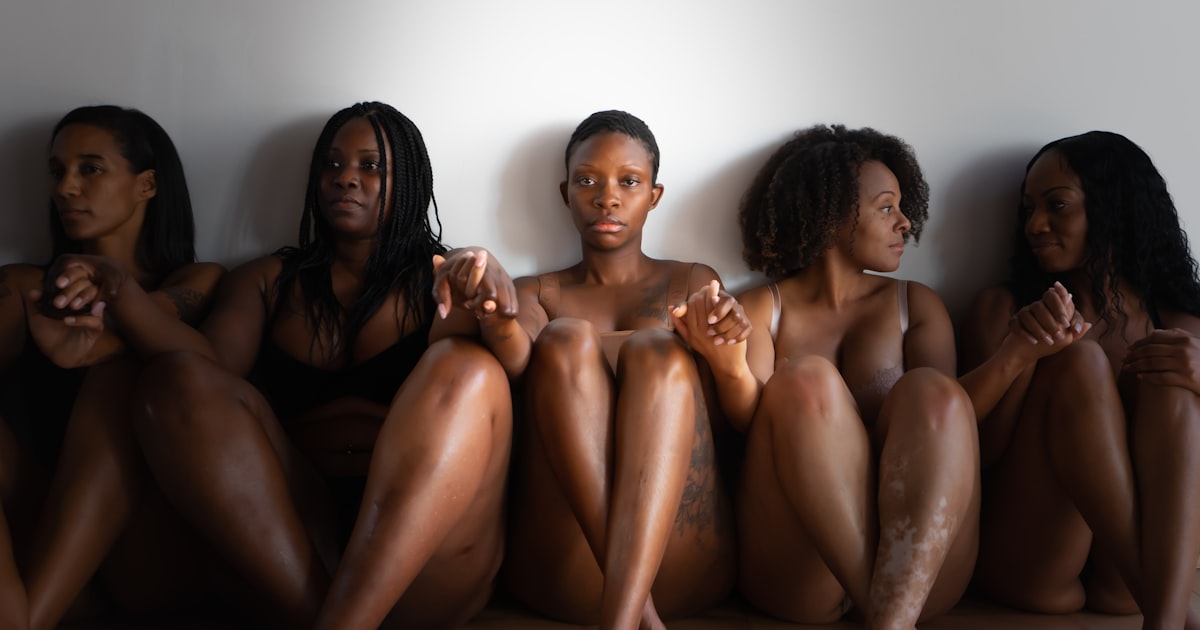
You've probably stood in front of a mirror and wondered: Why don't I look like them? Maybe your arms are longer, your hips are wider, your skin is darker, or your chest is flatter than what you see on Instagram. Here's the truth that nobody told you in school: every single human body is different, and that's not a flaw -- it's biology.
If you grew up in India, you've likely been on the receiving end of comments about your height, weight, skin colour, or body hair since childhood. Aunties at weddings, classmates in school, random strangers -- everyone seems to have an opinion on your body. But here's what science actually says about body diversity and why your body looks the way it does.
Your Body Is Literally One of a Kind
Let's start with the science. Your body is shaped by a combination of genetics, nutrition, environment, hormones, and ethnicity -- and no two combinations are ever identical.
Height
Scientists estimate that approximately 80% of your height is determined by the DNA you inherited from your parents, with some studies suggesting this figure may be as high as 90% (MedlinePlus Genetics, 2023). More than 700 gene variants contribute to how tall you end up being. That means if your parents are 5'4", you're probably not going to be 6'2" -- and that's completely fine.
The remaining 10-20% comes from environmental factors like nutrition during childhood. This is why the average height in India has been increasing over generations as nutrition improves, even though our genetic makeup hasn't changed dramatically.
Weight and Body Shape
Your body shape is influenced by where your body stores fat, your bone structure, and your muscle distribution -- all of which are largely genetic. Research shows that 37-53% of body weight variation across populations is attributable to genetic factors (Cambridge University Press, Annals of Human Genetics).
There's no single "correct" body shape. Pear-shaped, apple-shaped, athletic, slim, curvy -- these are all natural variations, not rankings from best to worst.
Skin Colour
India is one of the most skin-colour-diverse countries on Earth. The complexion in the Indian population ranges from very fair to deep brown, and this diversity exists because of several gene polymorphisms that control melanin production (Indian Journal of Dermatology, 2016).
Here's what a lot of people don't know: melanin, the pigment that determines skin colour, is produced by cells called melanocytes. Every human has roughly the same number of melanocytes regardless of skin colour. The difference is in the type and amount of melanin those cells produce -- controlled by your genes, not by your "worth."
Dr Rashmi Shetty, dermatologist: "Indian skin brings a unique perspective shaped by high UV exposure, genetic diversity, and varied skin tones that can exist within the same family. All skin tones are normal expressions of human genetics."
The Body Image Crisis Among Young Indians
If bodies are naturally diverse, why do so many of us feel like ours is "wrong"? The answer lies in social conditioning and, increasingly, social media.
The Numbers Are Concerning
- 28% of young Indian women report moderate-to-severe body dissatisfaction (Indian Journal of Psychiatry, 2020)
- Among Indian men, 34.4% experience moderate to marked body image dissatisfaction (Indian Journal of Social Psychiatry, 2020)
- 87% of participants in one Indian study had poor body image perception (IJMPR, 2023)
- 40.4% of females compared to 23.4% of males were dissatisfied with their body size
- Body image dissatisfaction is directly linked to depression, anxiety, and eating disorders (PMC, 2022)
Social Media Makes It Worse
You're constantly seeing filtered, edited, carefully posed bodies on Instagram and YouTube. A longitudinal study by Sharma found that prolonged exposure to idealized body content on social media worsens body image issues, particularly among young women in India.
Dr Beth Ghinassi, behavioural health expert: "There is a need for a balanced approach, which involves parents, schools, and the social media industry coming together to decrease the impacts of these platforms on our youth."
The bodies you see online are not representative of real human diversity. They represent a very narrow, often digitally manipulated standard.
Common Body Concerns -- and What Science Says
"My breasts are different sizes"
Breast asymmetry is completely normal. More than half of all women have breasts that are noticeably different in size or shape. During puberty, the left and right breasts often develop at different paces, and they may or may not even out. This is not a medical problem -- it's just how development works (Nemours KidsHealth).
"My penis is too small/too big"
There's enormous anxiety about genital size, especially among young Indian men, fuelled by unrealistic portrayals in pornography. The reality? There's a wide range of normal, and size has very little to do with sexual function or satisfaction. We've covered this in detail in our article on penis size myths.
"I have too much body hair" or "I have too little body hair"
Body hair patterns are genetic and vary widely across ethnicities and even within families. Some people are naturally hairy, others barely grow body hair. Both are normal. The pressure to remove body hair is cultural, not medical.
"My skin is too dark"
Let's be direct: colourism -- the preference for lighter skin -- is a social prejudice rooted in India's colonial history and caste dynamics, not in biology or health. Research from the Dark is Beautiful campaign shows that colourism negatively affects mental health, social status, and economic opportunities for millions of Indians. Your skin colour is determined by genetics. It says nothing about your health, beauty, or value.
"I'm too short/too tall"
Height falls on a spectrum, with most people clustering around the average for their population. In India, that's approximately 5'5" for men and 5'0" for women. Being above or below average is completely normal -- it just means you're at a different point on the bell curve.
Why "Normal" Is a Bigger Range Than You Think
Here's something that might surprise you: medical professionals define "normal" as a range, not a single number. For almost every body measurement -- height, weight, breast size, genital size, foot size -- there's a wide range that's considered healthy and typical.
Think of it like this: if you lined up 100 people of the same age and gender, you'd see enormous variation in every single body part. That variation is normal. The problem isn't your body. The problem is that we've been taught to compare ourselves to an impossibly narrow standard.
The Social Media Filter Problem
A 2023 study found that 51.5% of Indian youth had marked concerns about their body shape, and that problematic social media usage was a significant contributing factor (PMC, 2023). The images you're comparing yourself to are often:
- Professionally lit and photographed
- Filtered and edited with apps
- Posed at specific angles
- Sometimes surgically or cosmetically altered
- Selected from hundreds of takes
That's not what real bodies look like in real life. Not even the people in those photos look like their photos.
Building a Healthier Relationship With Your Body
1. Audit Your Social Media Feed
Unfollow accounts that make you feel bad about your body. Follow body-diverse creators, health professionals, and accounts that show unfiltered, real bodies. Your feed shapes your perception of "normal."
2. Learn the Science
Understanding why your body looks the way it does -- genetics, hormones, nutrition, ethnicity -- can help you stop seeing natural variation as a flaw. You wouldn't be upset that your DNA gave you brown eyes instead of blue. Your body shape deserves the same neutrality.
3. Focus on What Your Body Can Do
Your body carries you through the world. It digests food, fights infections, heals wounds, and allows you to experience pleasure, movement, and connection. Appreciating function over appearance is a science-backed way to improve body image.
4. Talk About It
If body image concerns are affecting your daily life, relationships, or mental health, talk to someone. A counsellor, a trusted friend, or a mental health professional can help. There's no shame in struggling with this -- 28-87% of young Indians do, depending on the study.
5. Challenge Comments
You don't have to accept unsolicited comments about your body. "My body is not up for discussion" is a complete sentence. Setting boundaries is healthy.
When to Actually See a Doctor
While most body variation is completely normal, there are a few situations where you should consult a healthcare provider:
- Sudden, unexplained changes in body shape or weight
- Delayed puberty (no signs of development by age 14-15)
- Extreme asymmetry that develops suddenly or is accompanied by pain
- Unusual growths, lumps, or skin changes
- Body image concerns that lead to disordered eating, self-harm, or severe anxiety
A good doctor will never shame you for asking questions about your body. If they do, find a different doctor.
The Samjho Perspective
At Samjho, we believe that understanding your body is the first step to feeling comfortable in it. Our short-form videos cover body diversity, anatomy, and self-acceptance in a judgment-free format -- because this is the sex education we all deserved but never got.
Every body is a normal body. Yours included.
FAQs
Is it normal for one side of my body to be slightly different from the other?
Yes, absolutely. Perfect symmetry doesn't exist in nature. Most people have one foot slightly larger than the other, one breast slightly different from the other, and even slightly different-sized ears. This is called developmental asymmetry and it's a universal human trait.
Why do I look so different from my siblings even though we have the same parents?
Each child receives a unique combination of genes from both parents. With thousands of gene variants influencing body characteristics, the possible combinations are essentially infinite. That's why siblings can vary significantly in height, build, skin tone, and features.
Does eating more during puberty make you taller?
Adequate nutrition during puberty supports your genetic height potential, but eating more than your body needs won't make you taller than your genes allow. However, malnutrition during childhood and adolescence can prevent you from reaching your full genetic height -- which is why nutrition matters.
Is skin lightening safe?
Most skin-lightening products available in India contain harmful ingredients like mercury, steroids, or hydroquinone in unregulated concentrations. The Indian Journal of Dermatology has documented serious side effects including skin thinning, permanent discolouration, and organ damage. Your natural skin tone is determined by genetics and is perfectly healthy.
How do I stop comparing my body to others?
Start by recognising that comparison is a habit, not a fact about your worth. Limit social media exposure to curated body content, follow diverse creators, and practice noticing what your body does well rather than how it looks. If comparison is consuming your thoughts, a mental health professional can help with specific techniques like cognitive behavioural therapy.
Sources
- MedlinePlus Genetics. "Is height determined by genetics?" (2023). https://medlineplus.gov/genetics/understanding/traits/height/
- Indian Journal of Psychiatry. "Prevalence and correlates of body dissatisfaction" (2020). https://journals.lww.com/indianjpsychiatry/fulltext/2020/62050/prevalence_and_correlates_of_body_dissatisfaction.9.aspx
- Indian Journal of Social Psychiatry. "Body Image Dissatisfaction in Young Indian Men" (2020). https://journals.lww.com/ijsp/fulltext/2020/36020/body_image_dissatisfaction_in_young_indian_men_.8.aspx
- Indian Journal of Dermatology. "Skin Hyperpigmentation in Indian Population" (2016). https://journals.lww.com/ijd/fulltext/2016/61050/skin_hyperpigmentation_in_indian_population_.3.aspx
- PMC. "Exploring Body Image Dissatisfaction and Psychiatric Co-morbidities in Rural India" (2024). https://pmc.ncbi.nlm.nih.gov/articles/PMC10899117/
- PMC. "Exploring the digital mirror: Problematic social media usage" (2023). https://pmc.ncbi.nlm.nih.gov/articles/PMC12517635/
- Nemours KidsHealth. "Why Are My Breasts Different Sizes?" https://kidshealth.org/en/teens/breast-size.html
- Dark is Beautiful Campaign. "Colourism in India." https://www.darkisbeautiful.in/colourism-in-india/
- WHO. "Sexually transmitted infections." https://www.who.int/news-room/fact-sheets/detail/sexually-transmitted-infections-(stis)