Birth Control Pills in India: Types, Side Effects, and How to Choose

By Dr. Meera Iyer
Gynecologist & Sexual Health Educator · MBBS, MS (OBG), Mumbai
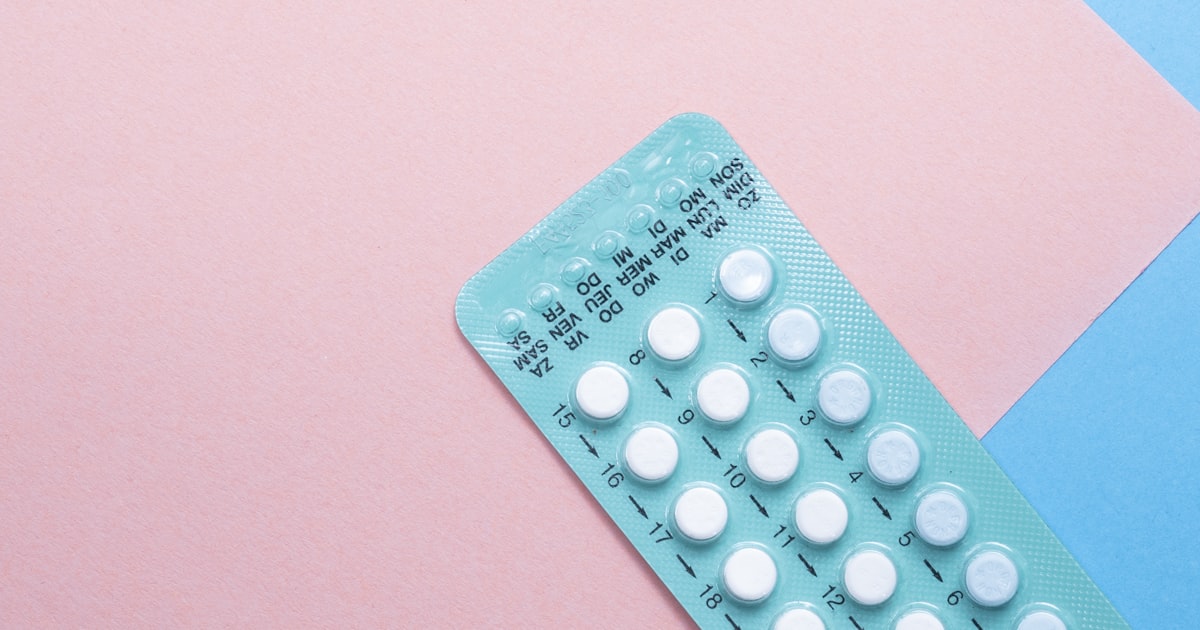
Only 5.1% of contraceptive users in India use oral contraceptive pills, according to NFHS-5 (2019-21). Compare that to 28% in the UK and 14% in the US. Indian women have access to birth control pills, but myths about side effects, fertility impact, and social stigma keep many from using them.
If you've been curious about the pill but confused by the options, scared by internet horror stories, or unsure if it's right for you, this guide is for you. We'll cover every type of birth control pill available in India, the real side effects (not the exaggerated ones), and how to choose.
How Birth Control Pills Work
Birth control pills use hormones to prevent pregnancy. They do this through three mechanisms:
- Preventing ovulation -- Your ovaries don't release an egg, so there's nothing for sperm to fertilise
- Thickening cervical mucus -- Makes it harder for sperm to reach an egg
- Thinning the uterine lining -- Makes it less likely for a fertilised egg to implant
Different types of pills use different hormones to achieve this. Let's break them down.
Type 1: Combined Oral Contraceptive Pills (COCPs)
These contain two hormones: estrogen (usually ethinyl estradiol) and progestin (which comes in several forms like levonorgestrel, desogestrel, drospirenone, or norgestimate).
How to Take Them
- Take one pill every day at approximately the same time
- Most packs have 21 active pills and 7 inactive/sugar pills (or a 7-day break)
- Your period usually comes during the pill-free/inactive days
- Start a new pack on day 29, whether or not your period has ended
Popular COCP Brands in India
| Brand | Hormones | Approximate Cost/Month | Notes |
|---|---|---|---|
| Mala-N | Levonorgestrel + Ethinyl Estradiol | Free (government) | Most widely distributed free pill |
| Mala-D | Levonorgestrel + Ethinyl Estradiol | Free (government) | Older formulation |
| Novelon | Desogestrel + Ethinyl Estradiol | Rs 150-200 | Popular prescription brand |
| Femilon | Desogestrel + Ethinyl Estradiol (lower dose) | Rs 130-180 | Lower hormone dose |
| Yasmin | Drospirenone + Ethinyl Estradiol | Rs 280-400 | May help with acne and bloating |
| Ovral-L | Levonorgestrel + Ethinyl Estradiol | Rs 40-60 | Affordable prescription option |
| Loette | Levonorgestrel + Ethinyl Estradiol | Rs 100-150 | Low-dose formulation |
| Dronis | Drospirenone + Ethinyl Estradiol | Rs 250-350 | Similar to Yasmin |
Effectiveness
- Perfect use: 99.7% effective
- Typical use: 93% effective (because people miss pills, take them late, etc.)
Who Should NOT Take COCPs
- Women over 35 who smoke
- Those with a history of blood clots, deep vein thrombosis, or pulmonary embolism
- Women with a history of breast cancer
- Those with uncontrolled high blood pressure
- Women who get migraines with aura
- Those with liver disease
Dr. Sujata Misra, Senior Consultant in Obstetrics and Gynaecology, explains: "The pill is one of the most well-studied medications in the world. When prescribed appropriately after screening for contraindications, it is very safe for the vast majority of women. The fear of pills causing cancer or permanent infertility is not supported by medical evidence."
Type 2: Progestin-Only Pills (Mini Pills)
These contain only progestin, with no estrogen. They work primarily by thickening cervical mucus, with some formulations also preventing ovulation.
How to Take Them
- One pill every day, at exactly the same time (even a 3-hour delay can reduce effectiveness)
- No break -- take them continuously
- More time-sensitive than COCPs
Available Brands in India
- Cerazette (Desogestrel) -- Rs 200-300/month
- Various levonorgestrel-only formulations
Effectiveness
- Perfect use: 99.7%
- Typical use: 91% (higher failure rate due to strict timing requirements)
Best For
- Women who cannot take estrogen (due to migraines with aura, blood clot history, etc.)
- Breastfeeding mothers (safe to use while nursing)
- Women over 35 who smoke
- Those who experience estrogen-related side effects with COCPs
Type 3: Centchroman / Saheli / Chhaya -- India's Non-Hormonal Pill
This is genuinely unique. Centchroman (ormeloxifene) is a non-steroidal, non-hormonal oral contraceptive developed entirely in India by CSIR-CDRI, Lucknow. It's the only non-hormonal oral contraceptive available anywhere in the world.
How to Take It
- First 3 months: Twice a week (every 3-4 days)
- After 3 months: Once a week
- Take on the same day(s) each week
Available As
- Chhaya -- Free through government health programmes (distributed via ASHA workers)
- Saheli -- Available at pharmacies for Rs 40-100
How It Works
Centchroman is a Selective Estrogen Receptor Modulator (SERM). It blocks estrogen receptors in the uterus, making the uterine lining unreceptive to implantation, and also has mild anti-ovulatory effects.
Effectiveness: 97-98%
Pros
- Non-hormonal -- avoids all typical hormonal side effects (no weight gain, no mood swings, no nausea from hormones)
- Only needs to be taken once a week after initial period
- Safe during breastfeeding
- Made in India, affordable
- Available free through government programmes
Cons
- Can cause delayed periods (sometimes by 1-2 weeks), which leads to pregnancy anxiety
- Slightly less effective than COCPs
- Not as widely known or prescribed -- many doctors default to hormonal options
- Limited international data compared to hormonal pills
Dr. Alka Kriplani, former Head of Obstetrics and Gynaecology at AIIMS New Delhi, has noted: "Centchroman is an excellent option, especially for Indian women who are wary of hormonal contraception. Its once-a-week dosing after the initial period makes compliance easier. The main issue is that many practitioners are unfamiliar with it and don't offer it as a first-line option."
Real Side Effects vs. Myths
Actual Common Side Effects of Hormonal Pills (COCPs)
These usually appear in the first 2-3 months and often resolve on their own:
- Nausea -- Take the pill with food or at bedtime to minimise this
- Spotting/breakthrough bleeding -- Common in the first 3 months
- Breast tenderness -- Usually mild and temporary
- Headaches -- If severe or accompanied by visual changes, stop the pill and see a doctor
- Mood changes -- Some women experience mild mood shifts; if significant, try a different formulation
- Decreased libido -- Reported by some women; switching pills may help
Rare but Serious Side Effects
- Blood clots (venous thromboembolism) -- Risk is 3-4 times higher than non-users, but the absolute risk is still very low (about 3-9 per 10,000 pill users per year vs. 1-5 per 10,000 non-users)
- Warning signs to watch for (remember ACHES): Abdominal pain (severe), Chest pain, Headaches (severe), Eye problems (blurred vision), Swelling in legs
Myths That Are Not True
| Myth | Reality |
|---|---|
| "Pills cause infertility" | No. Fertility returns within 1-3 months of stopping (sometimes within weeks) |
| "Pills cause cancer" | Pills actually reduce the risk of ovarian and endometrial cancer. There is a very small, temporary increase in breast cancer risk that disappears after stopping |
| "Pills make you gain lots of weight" | Studies show minimal or no weight gain attributable to modern low-dose pills. Some women retain 1-2 kg of water weight initially |
| "You need a break from pills every few years" | No medical basis for this. You can take pills continuously for years safely |
| "Pills reduce sexual pleasure" | Some women report decreased libido, but many report increased pleasure due to reduced pregnancy anxiety |
| "Only married women should take pills" | Pills are for anyone who wants to prevent pregnancy, regardless of marital status |
How to Start the Pill in India
Step 1: Consult a Doctor
While you technically need a prescription for hormonal pills, this step matters for your safety. A gynaecologist will:
- Check your blood pressure
- Review your medical and family history
- Screen for contraindications
- Recommend the best type and brand for you
Step 2: Get Your Prescription
You can visit:
- A gynaecologist at any hospital or clinic
- A government Primary Health Centre (PHC) -- consultations are free
- Telemedicine platforms like Practo, MFine, or Apollo 24|7
Step 3: Buy Your Pills
- Any pharmacy with a prescription
- Government health centres (Mala-N and Chhaya are free)
- Online pharmacies (1mg, PharmEasy, Netmeds)
Step 4: Start Taking Them
- Quick start method: Start on any day (use backup contraception like condoms for the first 7 days)
- Day 1 start: Start on the first day of your period (no backup needed)
- Sunday start: Start on the first Sunday after your period begins (use backup for 7 days)
What If You Miss a Pill?
Missed 1 pill (less than 24 hours late):
- Take it as soon as you remember
- Take the next pill at your usual time (even if that means two pills in one day)
- No backup contraception needed
Missed 2+ pills:
- Take the most recent missed pill as soon as possible
- Continue taking the rest of the pack as scheduled
- Use backup contraception (condoms) for the next 7 days
- If you had unprotected sex during the missed pills, consider emergency contraception
How to Choose the Right Pill
| If You... | Consider... |
|---|---|
| Are starting the pill for the first time | A low-dose COCP like Femilon or Loette |
| Want a free option | Mala-N (COCP) or Chhaya (centchroman) from government centres |
| Can't take estrogen | Progestin-only pill (Cerazette) |
| Want non-hormonal | Centchroman / Saheli |
| Have acne you'd like to improve | Yasmin or Dronis (drospirenone-based) |
| Are breastfeeding | Progestin-only pill or Centchroman |
| Struggle with daily pill-taking | Consider weekly centchroman, or non-pill options like IUD or injectable |
Samjho has a video series on birth control pills that walks through each type visually, with real user questions answered by doctors.
Frequently Asked Questions
Can I buy birth control pills without a prescription in India?
Technically, most hormonal pills are prescription-only (Schedule H). However, some pharmacies do sell them without a prescription. We strongly recommend getting a doctor's consultation first, because screening for contraindications is important for your safety. Centchroman (Chhaya/Saheli) is more easily available.
Will my parents find out if I take birth control pills?
If you're an adult (18+), your medical decisions are private. Doctors are bound by patient confidentiality. If you're concerned, order pills online through pharmacy apps (discreet packaging) or collect free pills from a government health centre.
Can I take birth control pills for period regulation, not just contraception?
Yes. Doctors frequently prescribe COCPs for irregular periods, painful periods, heavy bleeding, endometriosis, and PCOS management. The pill regulates your cycle by providing consistent hormone levels.
How long does it take for fertility to return after stopping the pill?
For most women, fertility returns within 1-3 months. Some women ovulate within 2 weeks of stopping. There is no evidence that pill use delays fertility long-term, regardless of how many years you've been on it.
Can I take the pill if I'm not in a relationship?
Of course. Many women take birth control pills for reasons beyond contraception -- period regulation, acne management, endometriosis relief. And even if your reason is contraception, that's a valid, responsible choice regardless of your relationship status.
The Bottom Line
Birth control pills give you control over your reproductive health. India has several options -- from free government-provided pills to India's own non-hormonal centchroman to modern low-dose hormonal formulations.
The "best" pill is the one that fits your body, your lifestyle, and your health profile. Talk to a doctor, try a formulation, give it 2-3 months to settle, and don't be afraid to switch if the first one doesn't suit you.
Your body, your choice, your timeline.
Disclaimer: This article is for educational purposes only and does not constitute medical advice. Always consult a qualified healthcare provider before starting any contraceptive medication. Sources include NFHS-5, WHO guidelines, and peer-reviewed medical research.
Sources:
- NFHS-5 India 2019-21
- Best Oral Contraceptive Pills in India -- Credihealth
- Birth Control Pills in India -- Dawaa Dost
- Choosing a Birth Control Pill -- Mayo Clinic
- CSIR -- World's First Non-Steroidal Birth Control Pill
- Centchroman Scoping Review -- PMC
- Contraceptive Pills Types and Side Effects -- Medindia